- The Life Sciences Innovation Forum (LSIF), the investment platform of the Riyadh Global Medical Biotechnology Summit (RGMBS 2026), brought 23 biotechnology companies from eight countries to Riyadh to pitch investors, judges and leaders of the Kingdom’s life sciences sector, organizers said.
- Investment firms expressed willingness to invest more than $120 million in companies that pitched at LSIF 2026, according to Dr. Abdulaziz Alrifi, director of partnerships at the King Abdullah International Medical Research Center (KAIMRC).
- Bilix, a South Korean biotech company, won the LSIF 2026 Grand Prize, organizers said.
- The United States led the cohort with eight companies, followed by Saudi Arabia with four, then South Korea, the United Kingdom, Australia, France, Germany and Switzerland, per organizers.
- Four companies won category awards: CellKure (Most Scalable Biotech Startup), Quantabia (Outstanding Founding Team), Swaza (Breakthrough Science) and Agemica (Innovation Excellence), organizers said.
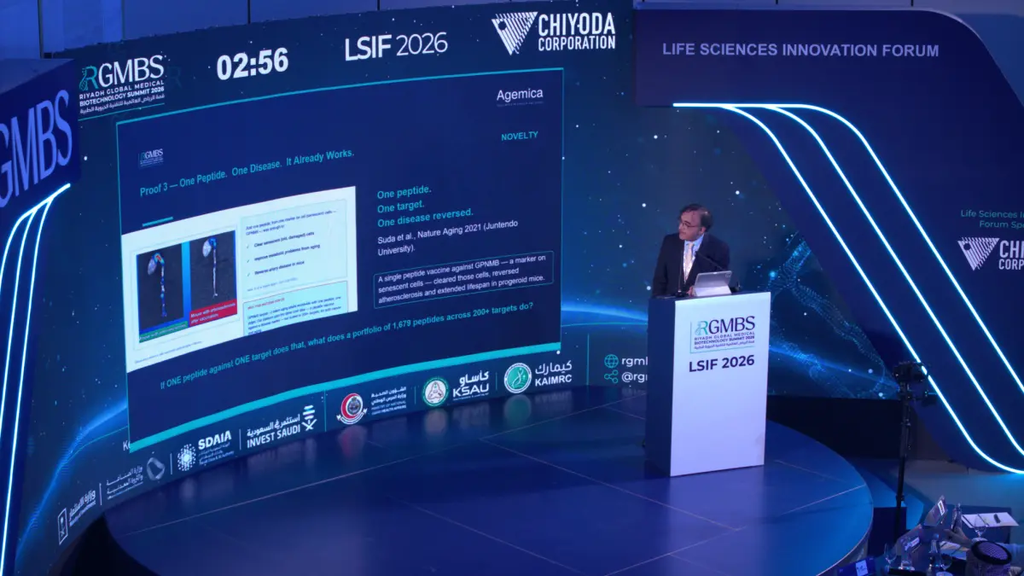
23 Companies, Eight Countries, One Grand Winner
The Life Sciences Innovation Forum, known as LSIF, is the investment platform of the Riyadh Global Medical Biotechnology Summit (RGMBS 2026). This year’s forum brought 23 biotechnology companies from eight countries to Riyadh to pitch investors, judges and leaders of the Kingdom’s life sciences sector, according to organizers.
“We were proud to welcome leading investment firms that expressed their willingness to invest more than $120 million in promising biotech opportunities emerging from LSIF 2026,” Dr. Abdulaziz Alrifi, director of partnerships at KAIMRC, said in a statement provided by organizers. “The journey culminated with the announcement of the LSIF 2026 Grand Winner: Bilix from South Korea.”
A representative of Bilix, whose Brixelle platform pairs the antioxidant bilirubin with polyethylene glycol to treat inflammation linked to organ transplantation, heart attack and stroke, said in a statement provided by organizers that “winning LSIF 2026 is a great honor,” but that “the real win is scaling our startup with the Kingdom’s research ecosystem.”
The United States led the cohort with eight companies, and Saudi Arabia was second with four, followed by South Korea, the United Kingdom, Australia, France, Germany and Switzerland, organizers said. Several international companies presented pathways to localization, research or clinical development inside the Kingdom, a pattern that tracks Saudi Arabia’s broader push to build domestic biotech manufacturing rather than only import finished therapies under its National Biotechnology Strategy, which targets a $34.6 billion non-oil GDP contribution by 2040.
Five Heats, One Frontier
Companies competed across five heats. In AI and bio data, Amprologix of the United Kingdom presented AI-assisted discovery of narrow-spectrum peptide antibiotics targeting drug-resistant pathogens, Pneumatica Bio of Australia presented mechanistic modeling and automated cell experiments to predict human therapeutic response, and Saudi company LinusBio MENA presented hair-based biomarker profiling.
In vaccine development and biomanufacturing, Biotech Innovations Company of Saudi Arabia presented a recombinant-protein MERS-CoV vaccine program focused on regional biosecurity and local manufacturing. OctoCells of France presented an animal-free 3D bioscaffold platform intended to reduce the water, infrastructure and manufacturing burden of producing biologics and cell therapies, and Cevza Therapeutics of Australia presented an RNA therapy platform with planned research and development localization in the Kingdom.
In cellular therapy and gene editing, CellKure of the United States highlighted Phase 1 results for its multi-antigen T-cell therapy in acute myeloid leukemia. MVRIX of South Korea presented an in vivo CAR-T approach using targeted mRNA delivery, and Saudi company Medixcel presented a platform to bring cell and gene therapy capabilities, partnerships and manufacturing into the Kingdom.
In bioengineering and synthetic biology, NanoZymeX of Switzerland presented a lipid nanoparticle platform meant to improve enzyme replacement therapy for lysosomal storage diseases, starting with Pompe disease. AUREXO Therapeutics of the United States presented engineered bacterial vesicles for precision oncology, and Ingenskin Therapeutics of France presented an autologous skin substitute for chronic wounds, burns and trauma.
In diagnostics and drug discovery, SiNON Nano Sciences of the United States presented a carbon nanoparticle platform designed to cross the blood-brain barrier. Spirea of the United Kingdom presented a dual-payload antibody-drug conjugate platform meant to address cancer drug resistance, and Accanito Therapeutics of the United States presented a clinical-stage oncology platform with a proposed technology transfer and local manufacturing plan for Saudi Arabia.
Questions from judges and the audience focused on turning science into treatments: regulatory routes, clinical evidence, manufacturing scale-up, localization economics and intellectual property, organizers said. LSIF 2026 was sponsored by Chiyoda Corporation.
Category Awards
Alongside Grand Winner Bilix, four category awards were presented: the Most Scalable Biotech Startup Award to CellKure, the Outstanding Founding Team Award to Quantabia, the Breakthrough Science Award to Swaza and the Innovation Excellence Award to Agemica. CellKure, Swaza and Agemica each have company or funding records independent of this event. LA Times Studios found no independent record for Quantabia beyond coverage tied to LSIF 2026; the name is close to Quantabio, an unrelated, established life sciences reagent maker, and the two should not be assumed to be connected.
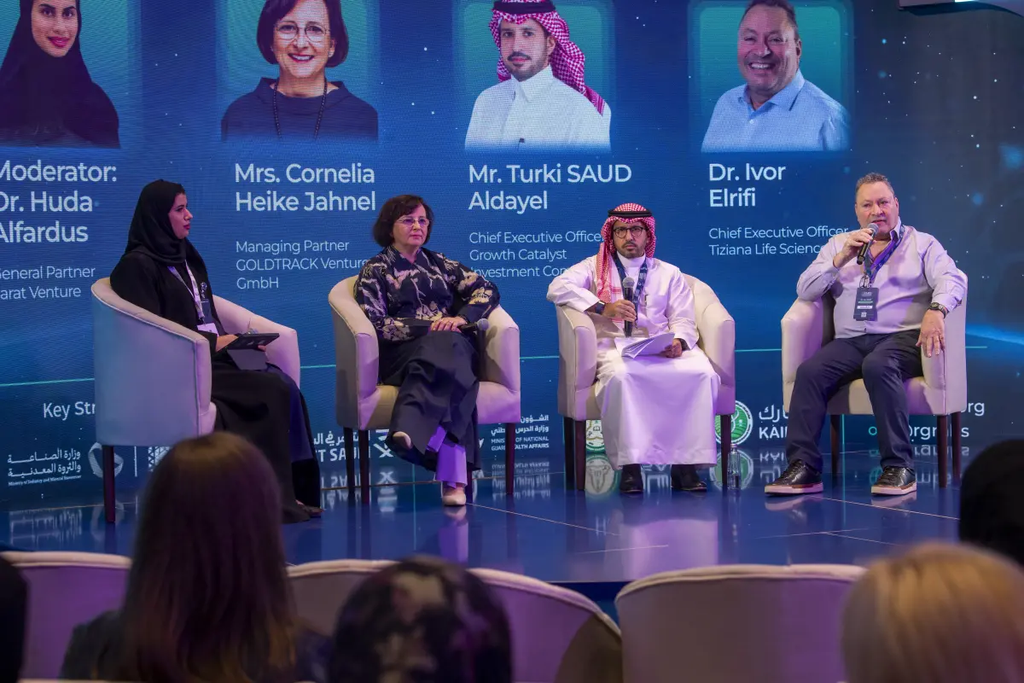
Inside RGMBS 2026
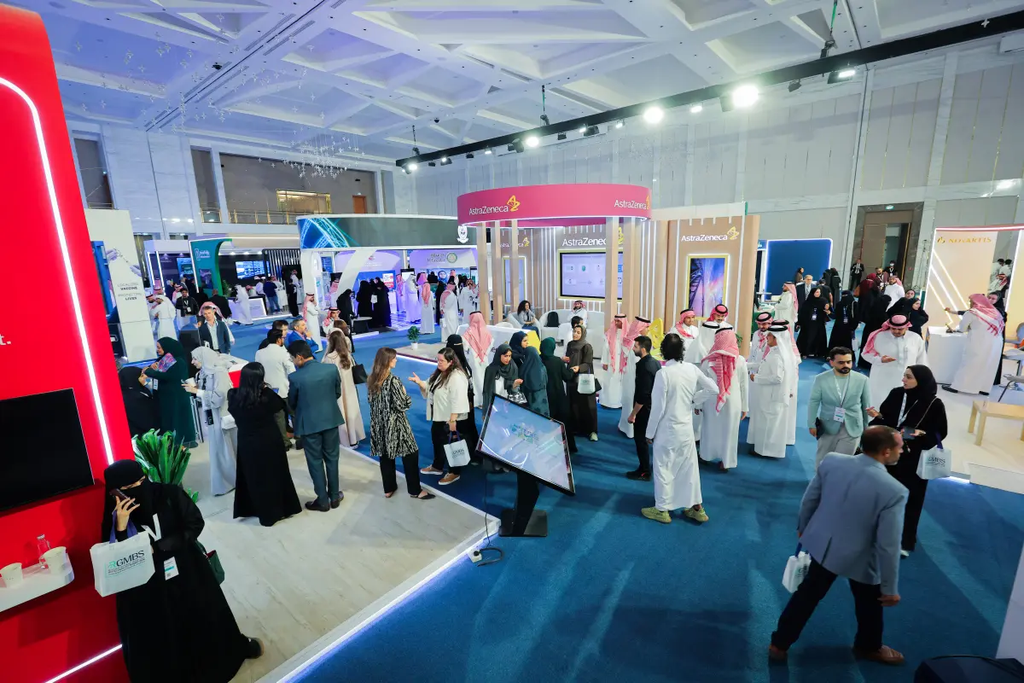
LSIF 2026 took place as part of RGMBS 2026, held Sept. 14-16 in Riyadh. The Summit was organized and supervised by the Ministry of National Guard, represented by its Health Affairs sector, and hosted by KAIMRC and King Saud bin Abdulaziz University for Health Sciences (KSAU-HS), with the Ministry of Investment, Invest Saudi and the Saudi Data & AI Authority (SDAIA) serving as key strategic partners. Now in its fourth edition, organizers said the full summit produced SAR 5.5 billion, or roughly $1.47 billion, in agreements and memoranda of understanding across its three days, a separate figure from the $120 million in investor interest tied specifically to LSIF’s pitch competition.
[원문보기]
Los Angeles Times (https://www.latimes.com/)